1. DEFINITION & AREAS WE SUPPORT
Women’s Health Physiotherapy is a specialist area dedicated to supporting women through all stages of life, from pregnancy and the postnatal period to perimenopause, menopause, and beyond. It focuses on the assessment, treatment, and management of conditions related to the pelvic floor, abdomen, and musculoskeletal system.
Many women experience issues like pelvic floor weakness, abdominal separation, or bladder and bowel problems, particularly after childbirth or during hormonal changes. These conditions are common, but they are not something you have to live with. Specialist physiotherapy provides the knowledge, targeted treatment, and correct exercises to restore function, reduce pain, and empower you to live an active, confident life.
We’re lucky enough to have a dedicated Women’s Health Physiotherapist at W5Physio. Learn more about Vicky here. The support she provides includes:
- Pregnancy & Postnatal Recovery: Preparing for birth, recovering from delivery (vaginal or c-section), treating Diastasis Recti (tummy gap), and safely returning to exercise. We are also certified providers of the Mummy MOT.
- Pelvic Floor Dysfunction: Addressing weakness, overactivity (tension), pain, and symptoms of Pelvic Organ Prolapse.
- Bladder & Bowel Health: Managing incontinence (stress and urge), urgency, frequency, constipation, and issues with emptying.
- Menopause Transition: Supporting the body through perimenopause and menopause, addressing issues like vaginal dryness, joint pain, and changes to pelvic health.
- Sexual Dysfunction: Helping with pain during intercourse (dyspareunia) and other intimacy-related issues.
2. COMMON SYMPTOMS & SIGNS
You may benefit from seeing a Women’s Health physiotherapist if you experience any of the following:
- Bladder Leakage: Leaking urine when you cough, sneeze, laugh, jump, or run (stress incontinence).
- Urgency: A sudden, desperate need to go to the toilet, which can sometimes result in leakage (urge incontinence).
- Pelvic Heaviness or Dragging: A sensation of something “coming down” inside the vagina, which can be a sign of Pelvic Organ Prolapse.
- Tummy Gap or “Doming”: A visible gap or bulging along the midline of your abdomen, known as Diastasis Recti.
- Pelvic or Lower Back Pain: Persistent pain in the pelvis, hips, or lower back that hasn’t responded to other treatments.
- Painful Sex: Discomfort or pain during or after intercourse.
- Bowel Issues: Difficulty with constipation, straining, or a feeling of incomplete emptying.
- Menopause-related Symptoms: New or worsening joint aches, vaginal dryness, or changes in your bladder habits.
3. CAUSES & RISK FACTORS
These conditions can develop for many reasons and are influenced by hormonal changes and physical stresses throughout a woman’s life.
- Pregnancy and Childbirth: The weight of the growing baby and the process of delivery place significant strain on the pelvic floor and abdominal muscles.
- Menopause: The decline in oestrogen during perimenopause and menopause can affect muscle mass, tissue elasticity, and joint health, impacting the pelvic floor and contributing to bladder symptoms.
- High-Impact Exercise: Repetitive jarring activities like running can place stress on the pelvic floor if it isn’t functioning optimally.
- Chronic Straining: Long-term constipation or persistent coughing can weaken the pelvic floor over time.
- Poor Posture and Lifting Technique: Incorrect mechanics can increase pressure on the abdomen and pelvic floor.
- Previous Surgery: Gynaecological or abdominal surgery can affect pelvic floor and core function.
4. HOW PHYSIOTHERAPY HELPS
So much can be achieved through correct knowledge, treatment, and exercise. Our approach is sensitive, confidential, and tailored to you.
- Specialist Assessment: We start with a detailed conversation about your symptoms, history, and goals. This may include a comprehensive pelvic health assessment, which can involve an internal pelvic floor examination. This is the gold standard for accurately assessing muscle strength, tone, and coordination, but it is only ever performed with your informed consent and utmost comfort. We are also official providers of the Mummy MOT, a detailed postnatal check-up.
- Education and Lifestyle Strategies: We empower you with knowledge about your body. We provide practical advice on bladder and bowel habits, fluid intake, diet, and strategies to manage your symptoms in daily life.
- Pelvic Floor Muscle Training: We teach you how to correctly contract, relax, and coordinate your pelvic floor muscles. It’s not just about squeezing; it’s about restoring optimal function, whether the issue is weakness or over-tension.
- Core Rehabilitation: We guide you through a safe and progressive exercise programme to address Diastasis Recti and rebuild your core strength from the inside out.
- Manual Therapy: We may use hands-on techniques to release tight muscles in the pelvis, back, and hips that may be contributing to your pain.
- Return to Exercise Guidance: We provide a structured plan to help you safely return to the activities you love, whether it’s running, weightlifting, or yoga, without aggravating your symptoms.
- Collaboration: We work closely with your GP, gynaecologist, or other specialists and can provide onward referrals when necessary.
5. TIMELINE / EXPECTED RECOVERY
- Recovery is highly individual. For postnatal recovery or managing incontinence, many women notice significant improvements within 6-12 weeks of starting a consistent, targeted programme.
- More chronic or complex conditions, such as pelvic pain or prolapse management, may require a longer-term approach over 3-6 months to build strength and change habits.
- The key is consistency. Our goal is to give you the tools and confidence to manage your health for the long term.
6. SELF-HELP & PREVENTION
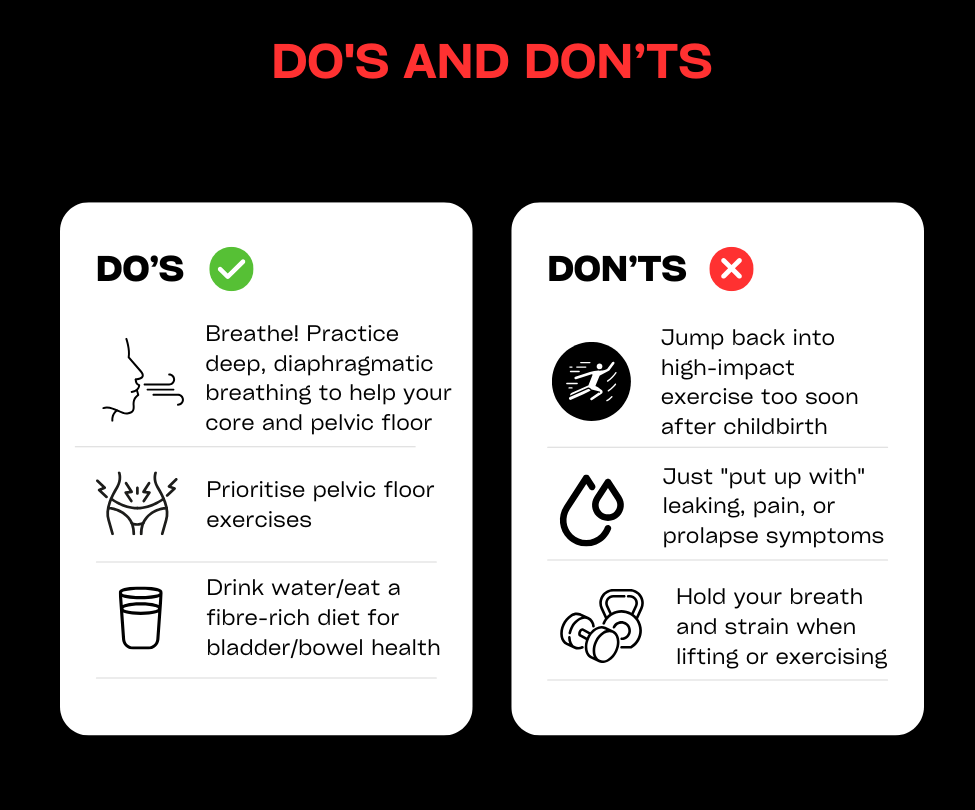
- Mindful Movement: Pay attention to your posture and learn how to lift correctly, using your legs and engaging your core to avoid straining.
- Bowel Health: Avoid straining on the toilet. A healthy diet rich in fibre and adequate fluid intake are crucial for preventing constipation.
- Learn to Relax Your Pelvic Floor: Your pelvic floor needs to relax just as much as it needs to contract. Practice diaphragmatic (belly) breathing to help release tension.
- Be Patient Postnatally: Allow your body time to heal after birth. Avoid high-impact exercise until you have rebuilt your core and pelvic floor foundations.
7. WHEN TO SEE A PHYSIO OR SPECIALIST
These conditions should not be something you just “put up with” because you have had a baby or are going through menopause. It’s time to book an appointment if:
- You leak urine or faeces, no matter how small the amount.
- You feel a sense of heaviness or a bulge in your vagina.
- You have pain in your pelvis, lower back, or during sex.
- You have had a baby and want a comprehensive check-up (Mummy MOT) to guide your recovery.
- You are entering perimenopause or menopause and want to proactively manage your pelvic and musculoskeletal health.
Learn more about the Mummy MOT here. Or, book in today for the health check you deserve.